An app designed to foster connections between newcomers and locals in Stockholm through at-home events.
Target Group
Immigrants and expats in Stockholm
Goal
Foster connections between the target group and locals
Team
4 designers
Duration
2 months
The Problem - Segregation in Sweden
Segregation has been allowed to go so far that we have parallel societies in Sweden. We live in the same country but in completely different realities.
Former Prime Minister of Sweden, Magdalena Andersson
Inequality
Segregation often results in unequal access to resources, opportunities, and services.
Social Division
Segregation creates and deepens social divisions, leading to a lack of understanding and empathy.
Economic Costs
Society loses out on talent and productivity. Increased social welfare costs and reduced economic growth.
Our Solution
An app where users host and join at-home events and collect virtual passport stamps for each culture they explore. This creates opportunities for immigrants and locals to meet, interact, and buildrelationships in a comfortable and personal setting. These events are focused on sharing cultural practices, such as cooking traditional meals, celebrating holidays, or discussing cultural traditions.
Design Process
1. Discover
User Interviews
2. Define
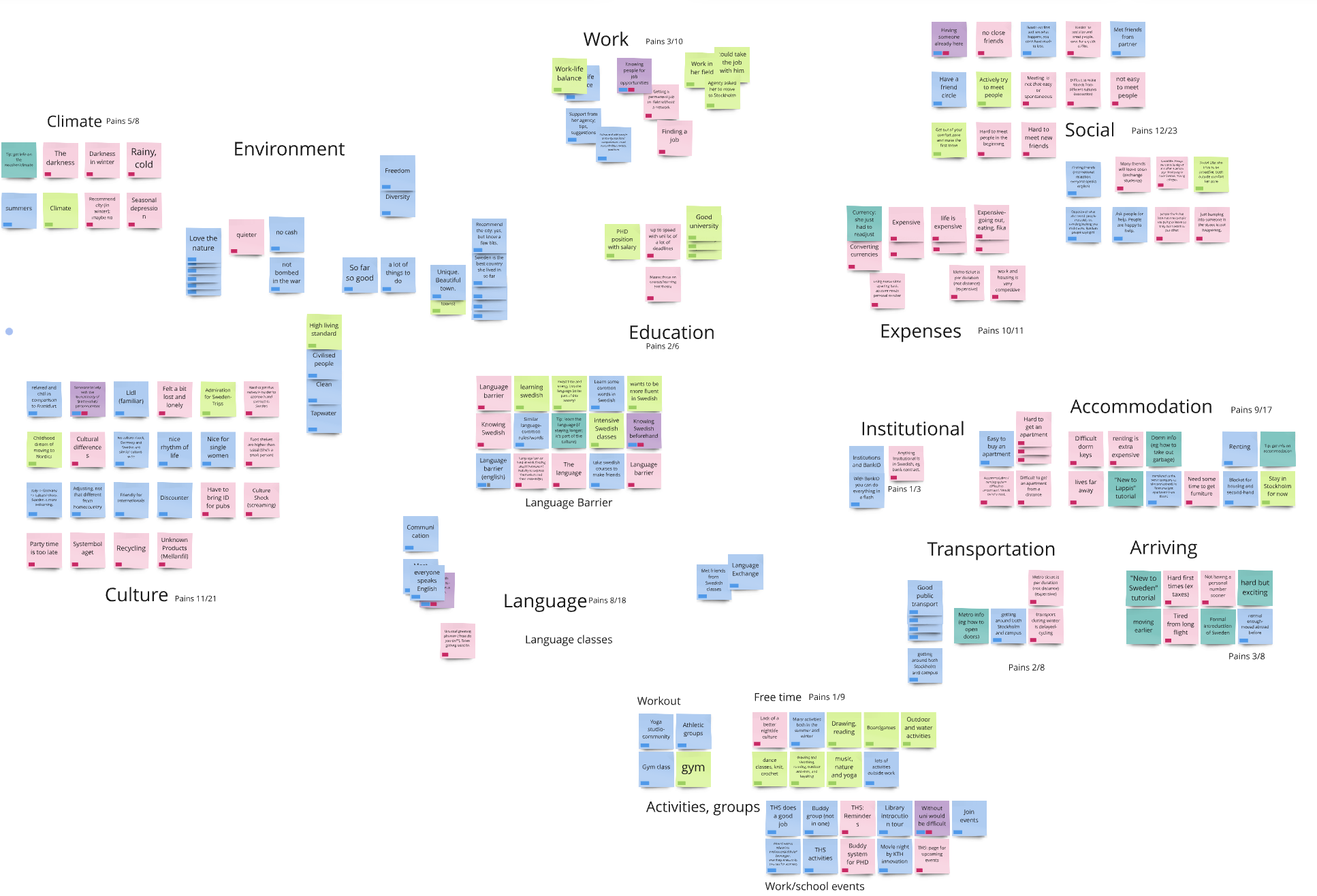
Insights Clustering
Personas
Storyboarding
How Might We…
3. Develop
Sketching
Wireframing
Moodboard
Digital Protoype
Usability Testing
4. Deliver
Interactive Digital Prototype
User Interviews and Insights Clustering
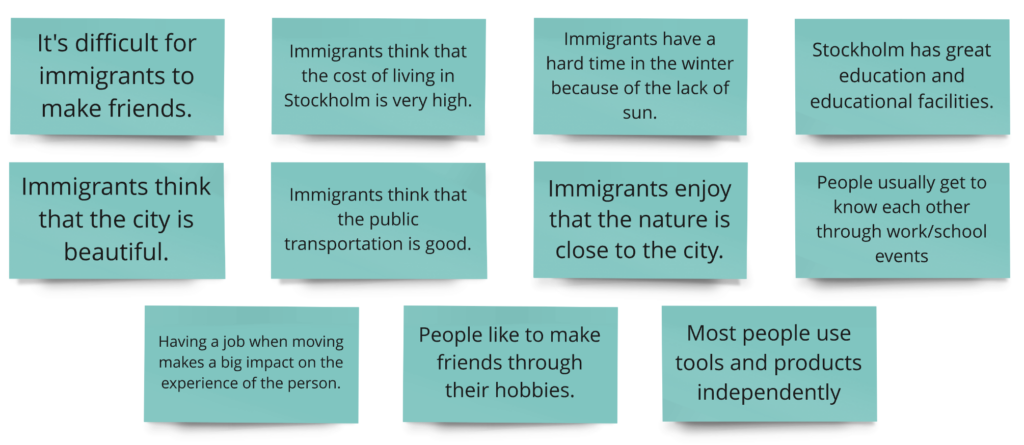
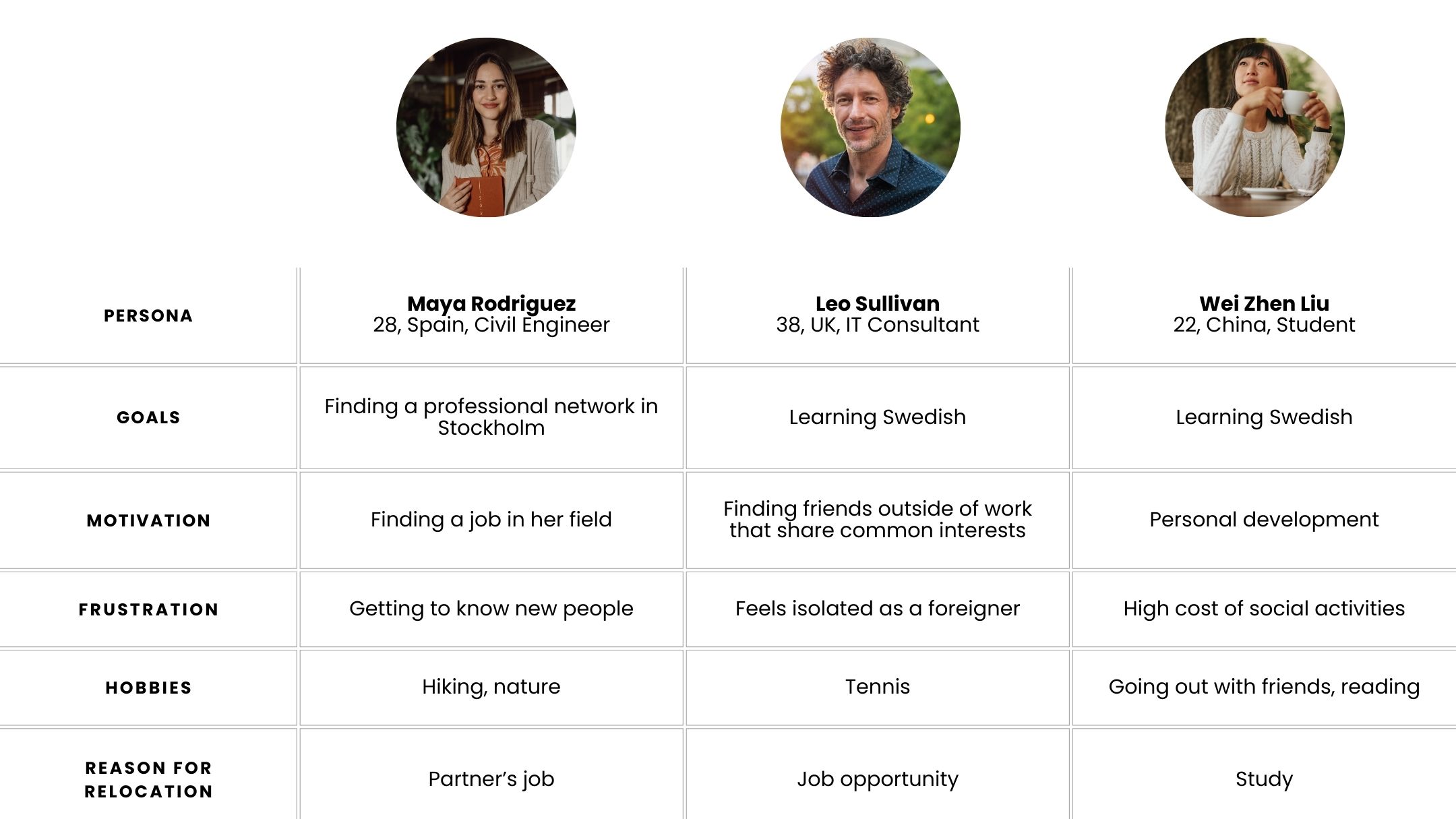
We aimed to understand what the initial period in Stockholm is like for our users, specifically whether they felt they could interact with locals and how they made friends. We conducted semi-structured, 30-minute interviews with seven participants. Afterward, we colour-coded and clustered insights from each interview. These clusters led to 11 conclusions about the participants’ experiences when moving to Stockholm. Based on these conclusions, we created personas.
Personas
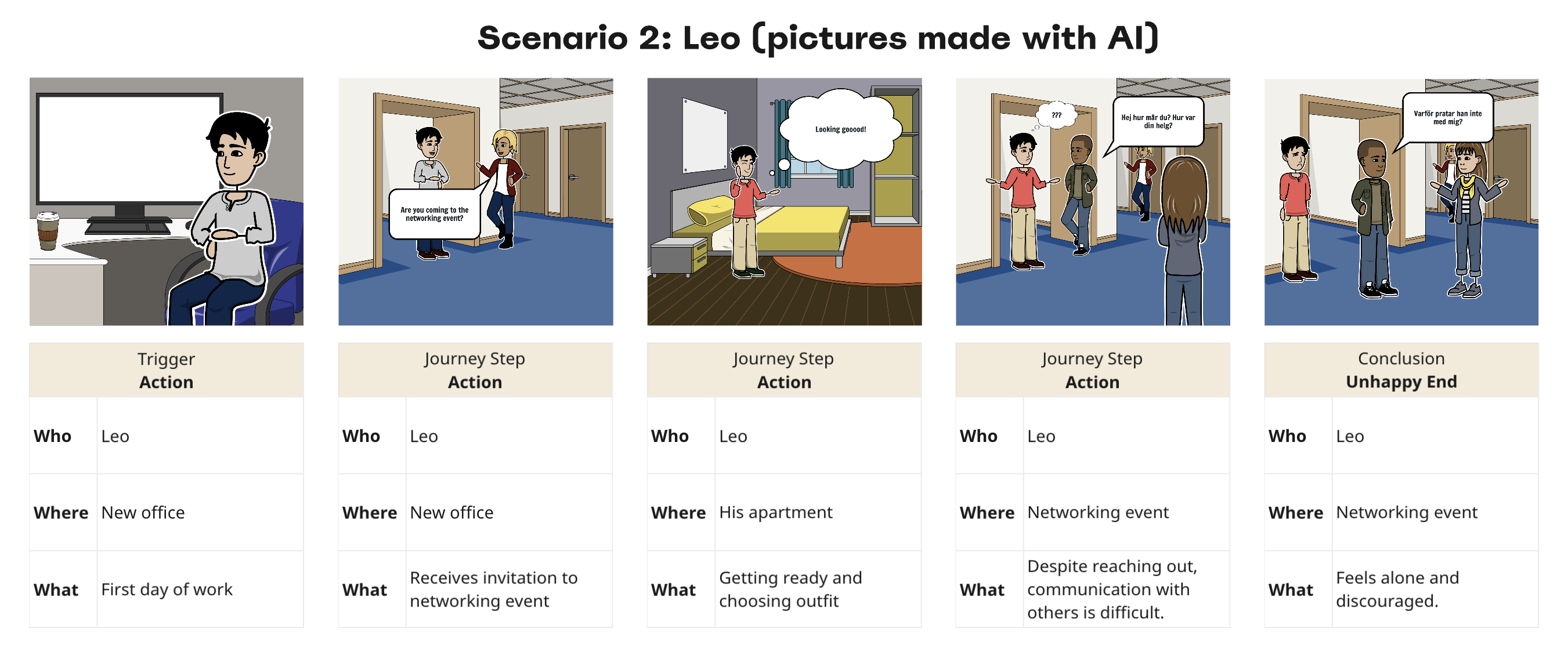
Storyboards
We created storyboards to visualise the experience and emotions of our personas so that we could better understand where a digital product could help improve their experience. After understanding our users better, we brainstromed different How Might We… statements.
How might we increase communal involvement for both immigrants and locals to practice affordable hobbies, events and activities?
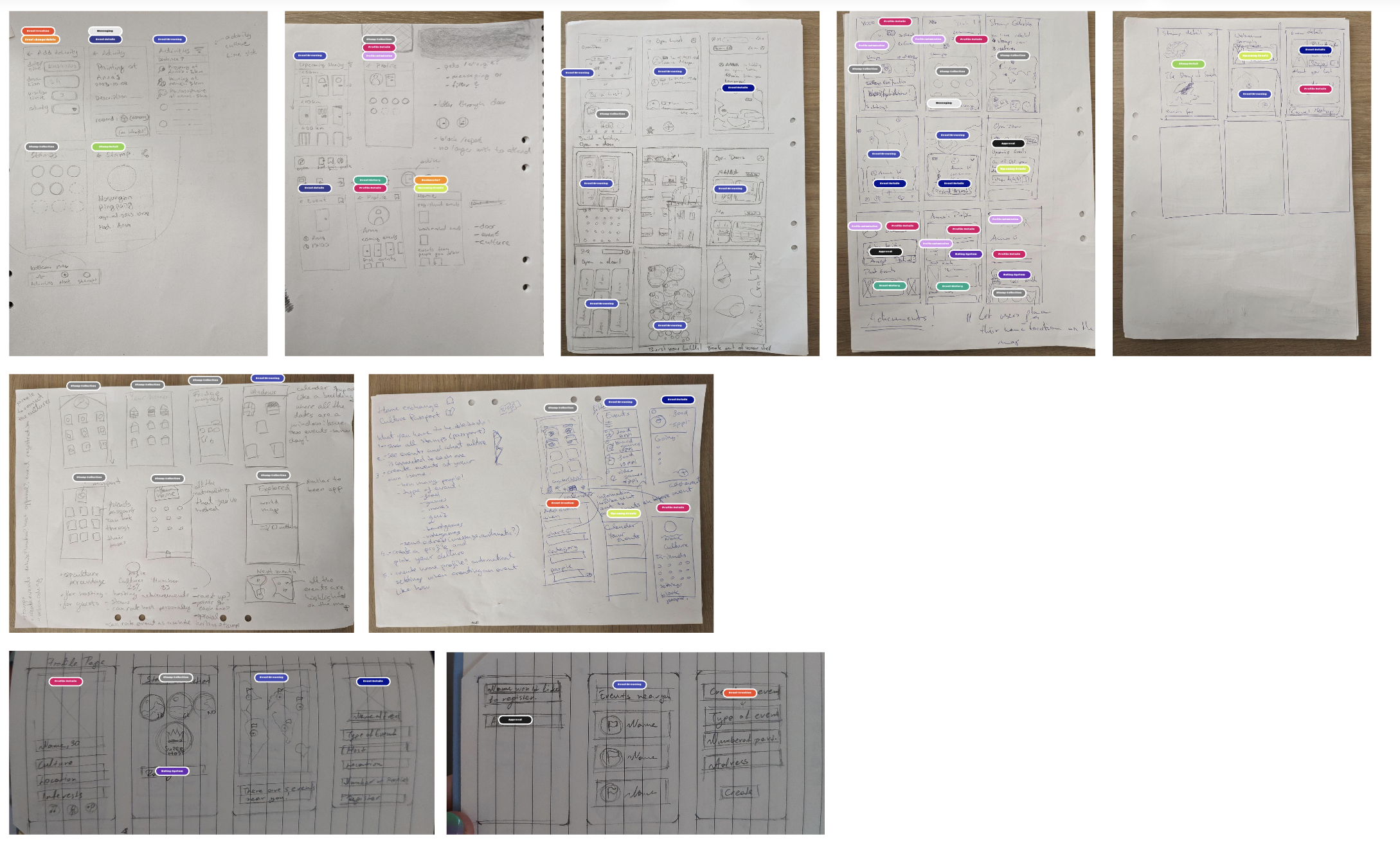
Parallel Sketching
After brainstorming various ideas, we decided on creating an event app. We conducted parallel sketching to explore different alternatives for ensuring that both locals and immigrants would want to join these events. As a solution, we brainstormed “rewards” for joining and hosting events. Ultimately, we settled on a location-based event app where users would receive stamps, similar to passport stamps, when they explore different cultures.
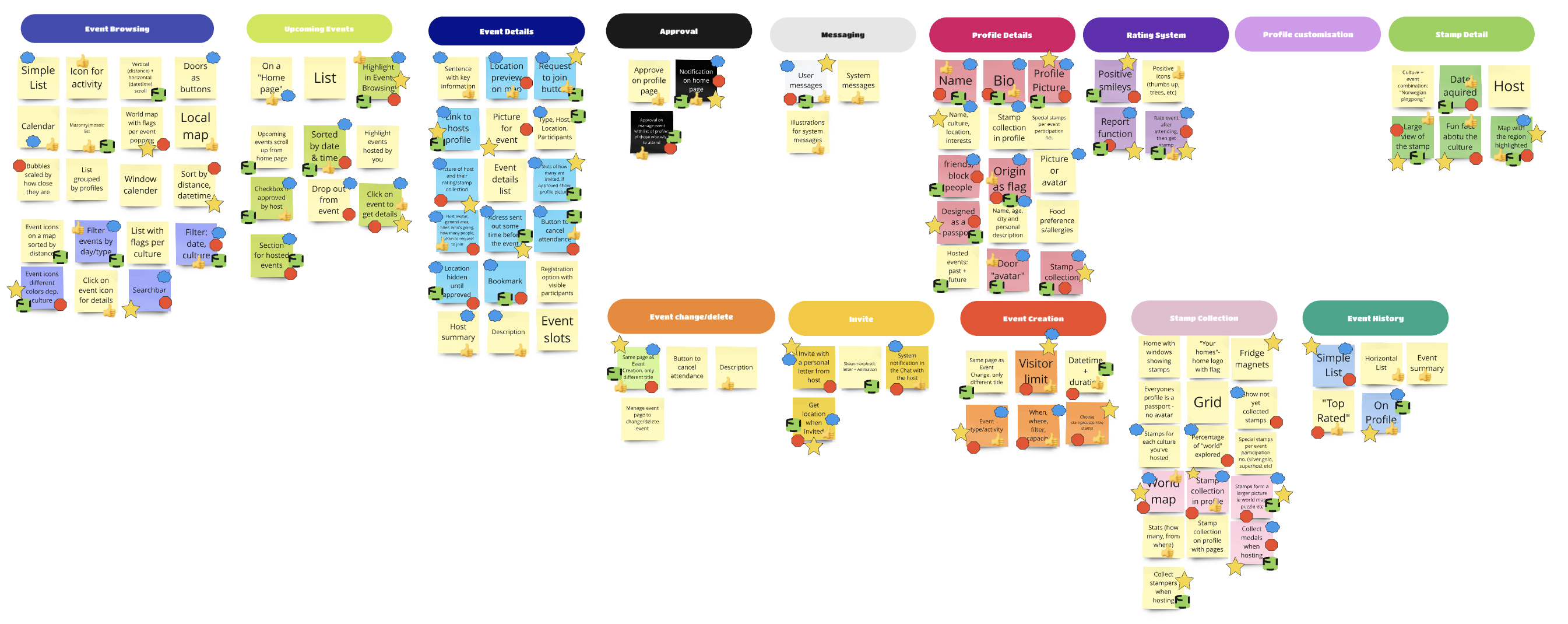
Feature Selection
After finalizing our idea, we determined the necessary pages for the app and brainstormed potential features for each one. We then voted on which features to include, prioritizing simplicity to avoid making the app overly complicated. This careful selection ensured we focused on only the most essential features.
Parallel Wireframing
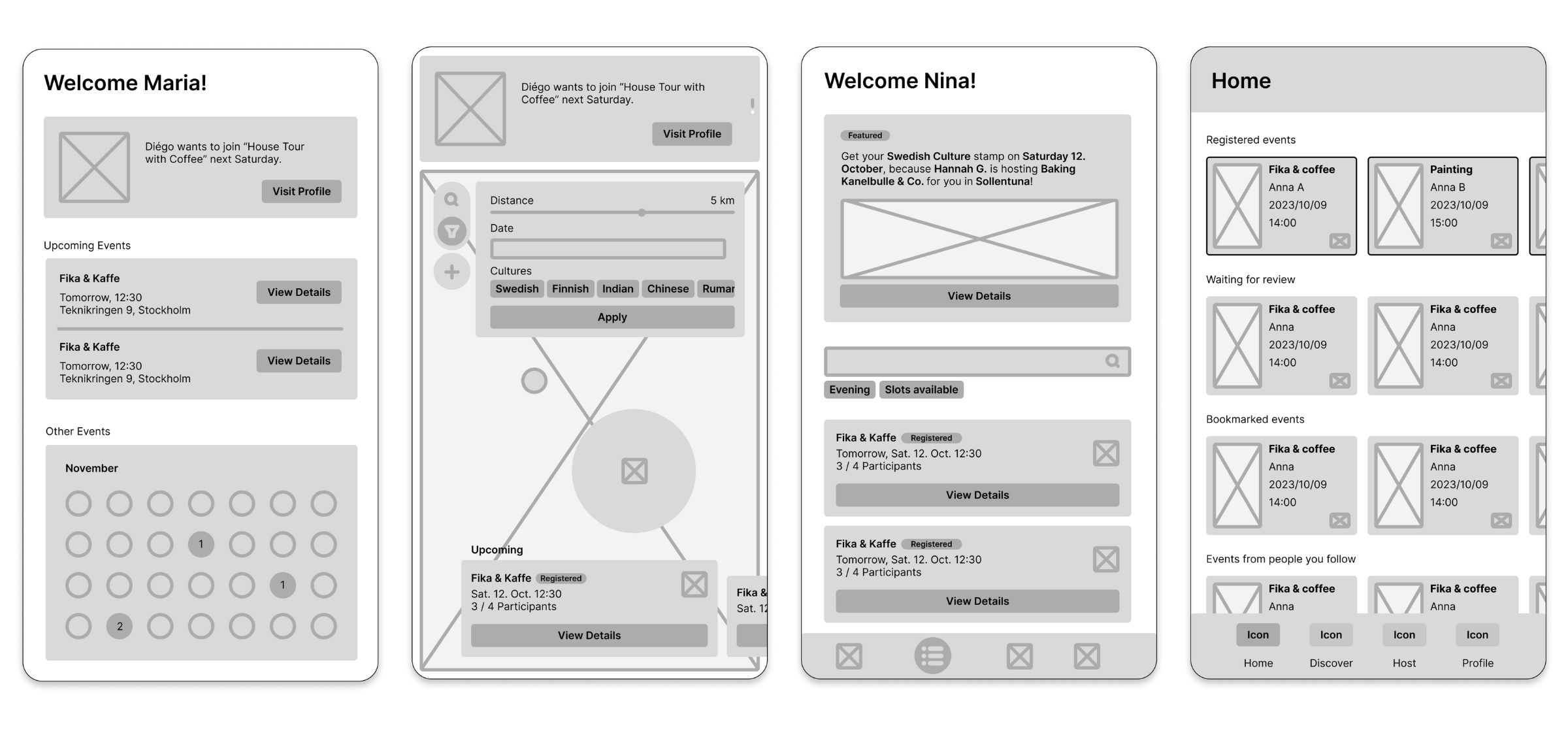
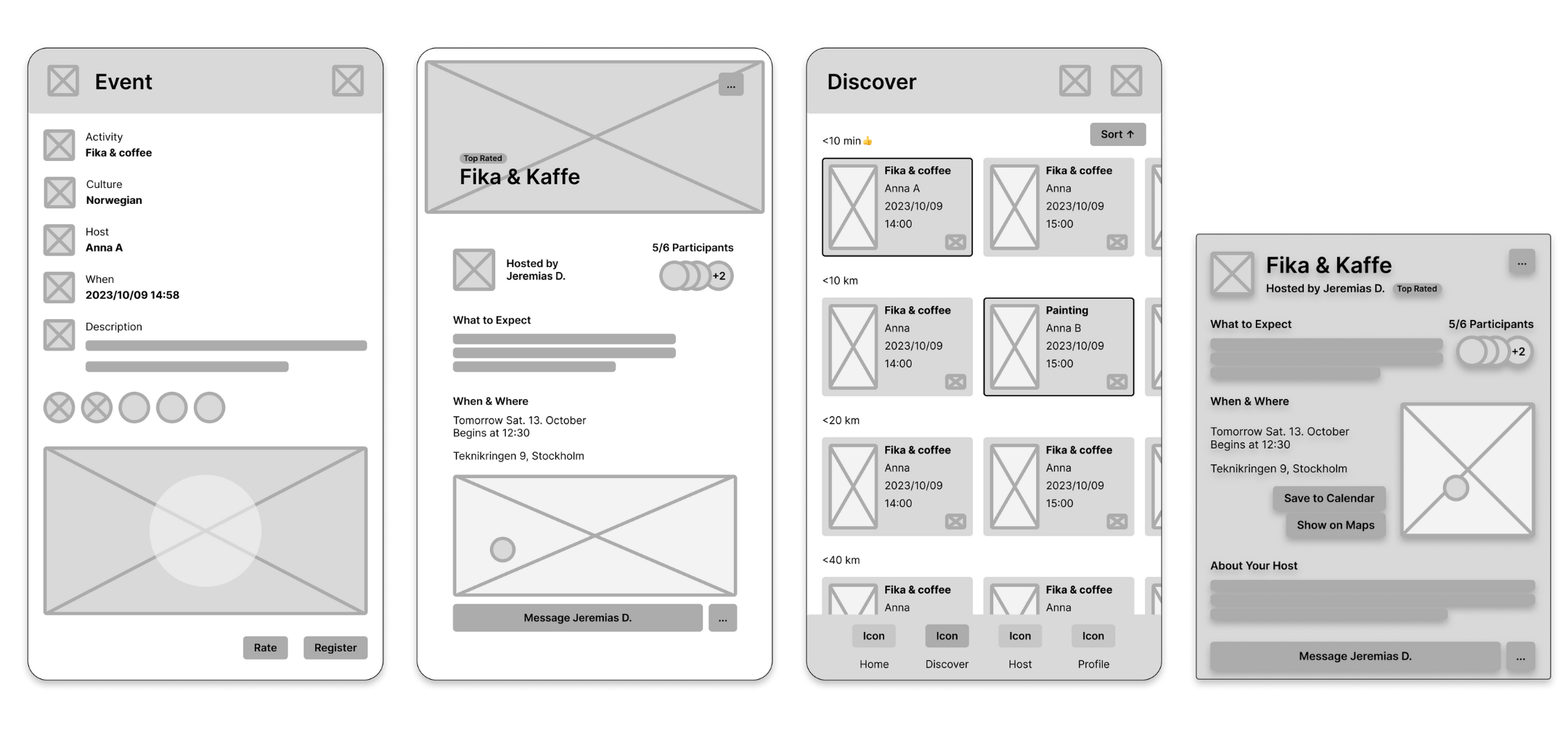
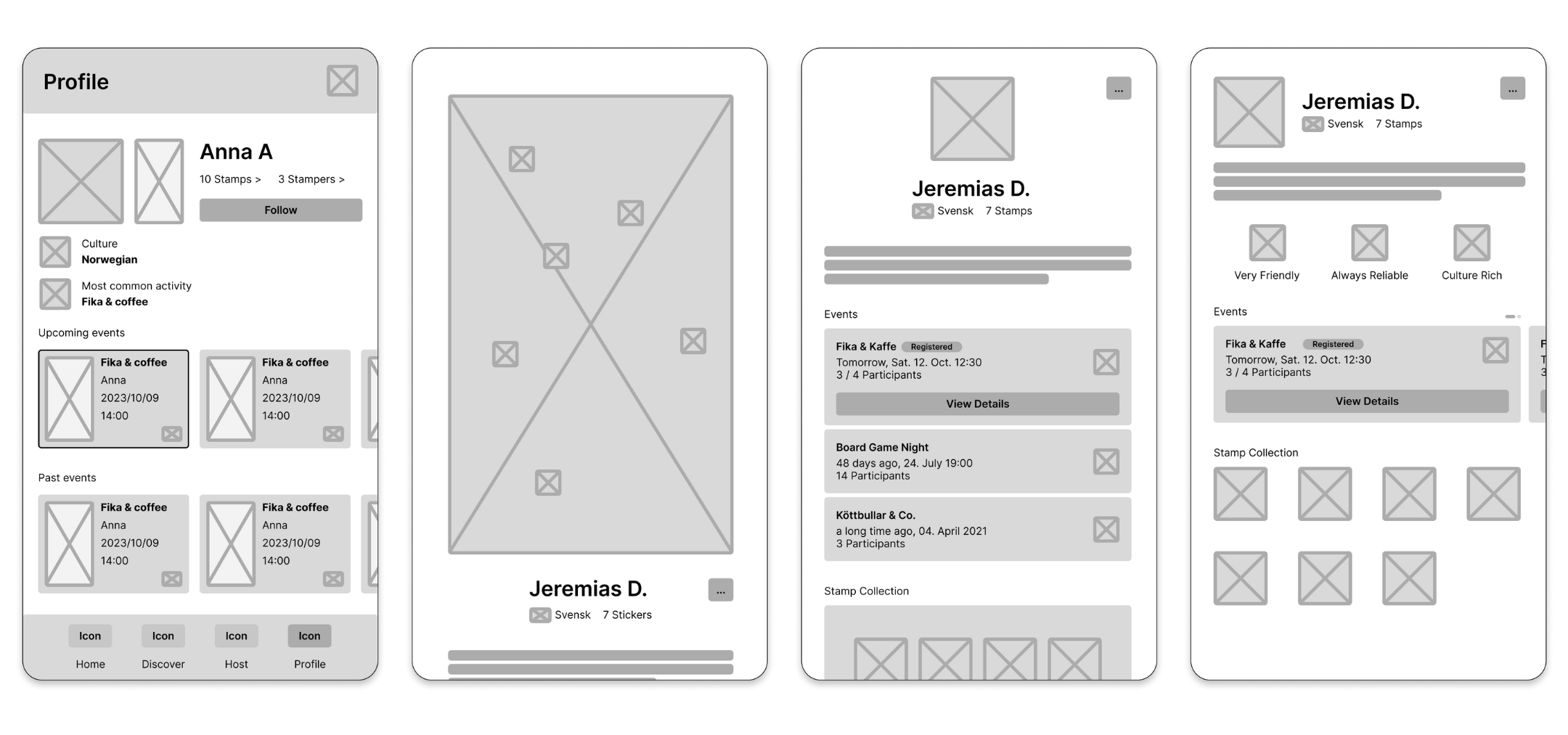
Based on the chosen features, we conducted parallel wireframing for the main pages of the app to generate as many ideas as possible for their structure. We aimed to make the app as simple and user-friendly as possible. By brainstorming separately, we avoided influencing each other and were able to find the simplest and cleanest solutions.
Home Page
Event Page
Profile Page
Moodboard
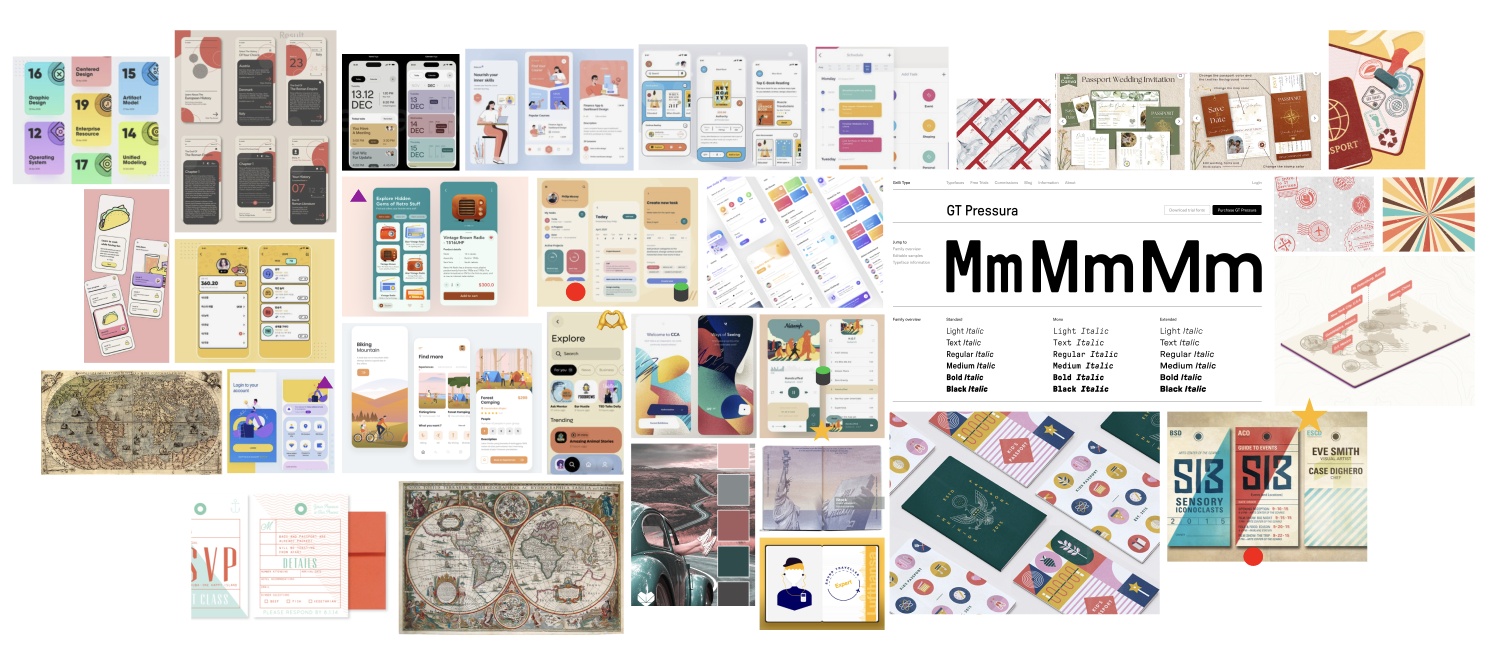
Once the wireframes were complete and we were ready to create the digital prototype, we created a moodboard to determine the desired feel of the app. Since we decided to use passport stamps in our app, we aimed for a vintage, classic design.
We created a digital interactive prototype in Figma on which we conducted one round of usability testing.
Key Feedback from Users
Users considered sharing their address and inviting strangers into their homes to be risky. They also wanted to limit the number of attendees at their events. To address these concerns, we implemented an approval system where the event location is not visible initially. Users must be approved by the event host to receive the exact address. This approach addresses both privacy concerns and the issue of managing the number of guests.
Why stamps?
Many people enjoy collecting passport stamps as reminders of the places and cultures they’ve explored. We wanted to recreate that experience to encourage users, especially locals, to host and join events. Locals, being more settled in their daily lives, might not seek new friends as much as newcomers.
Interactive Prototype
Finding Events
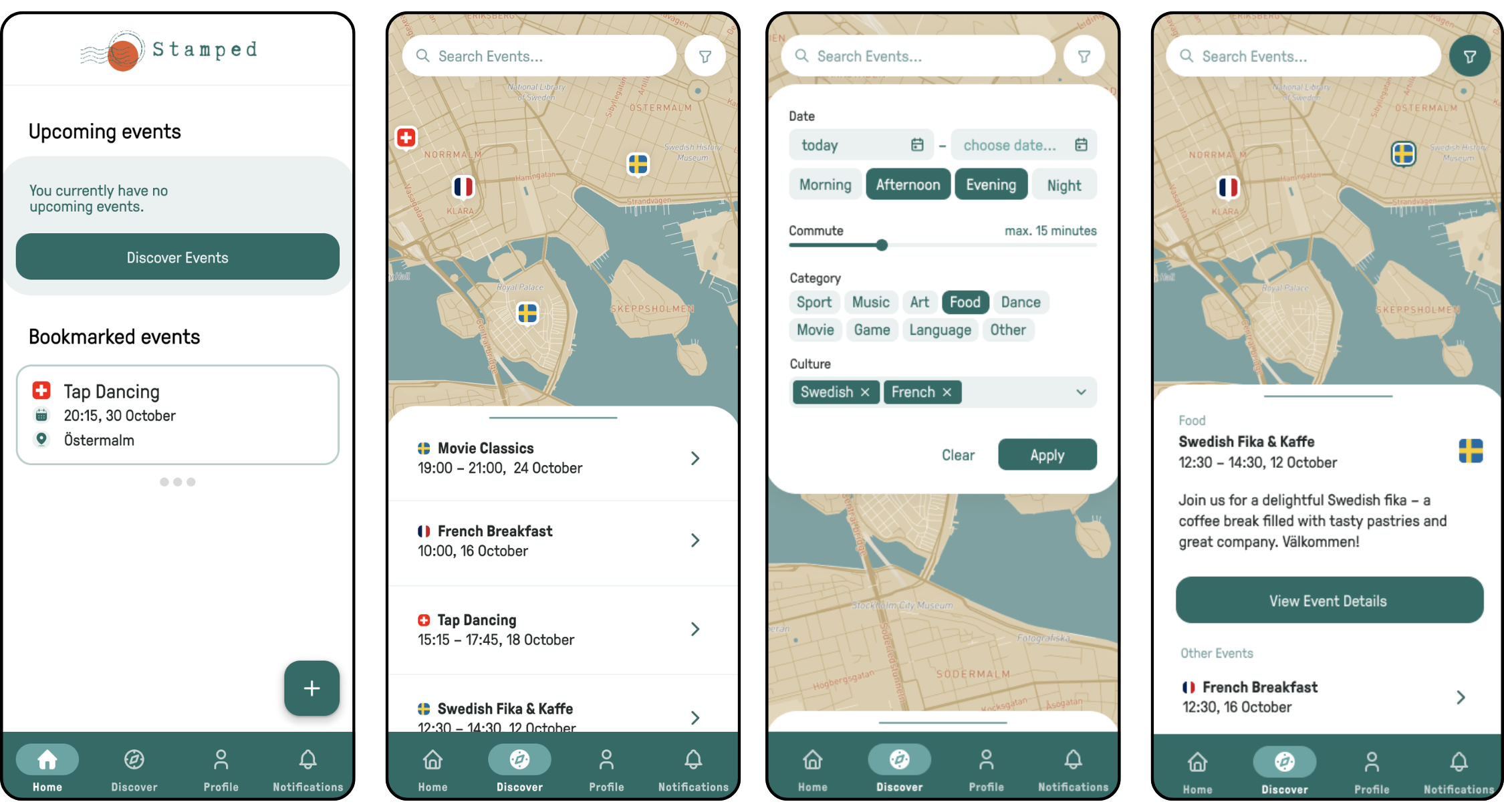
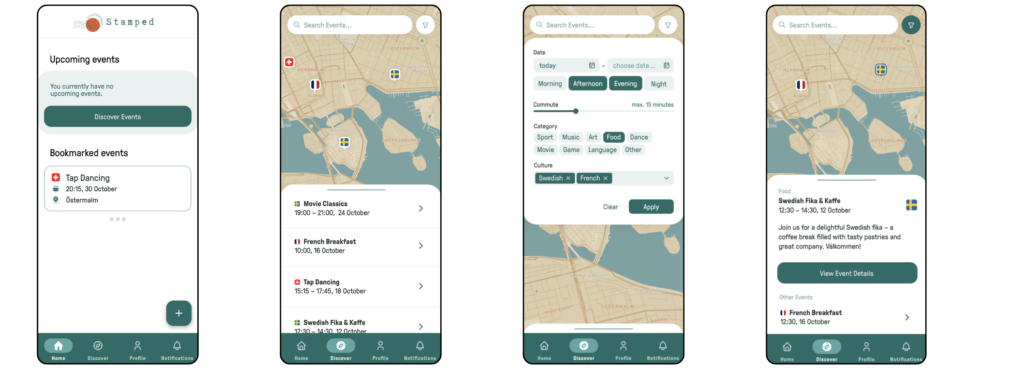
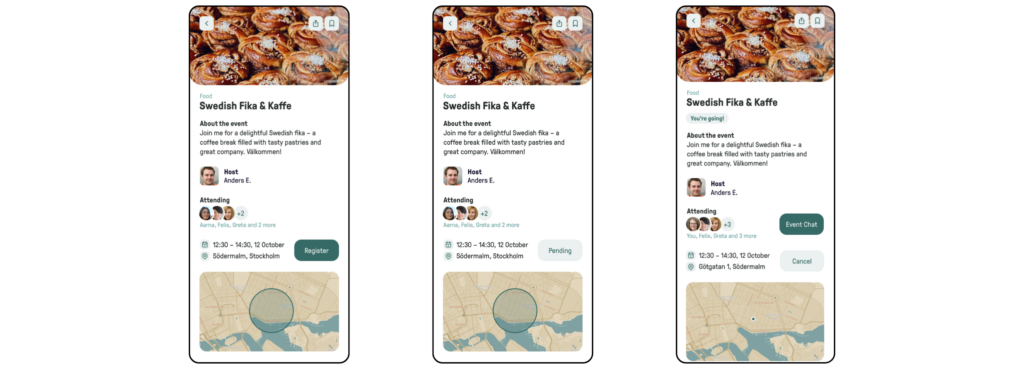
Users can easily find events created by other users by filtering based on date, time of day, distance from their current location, category, and culture. A radius showing the approximate location is visible to keep the host’s privacy.
Joining Events
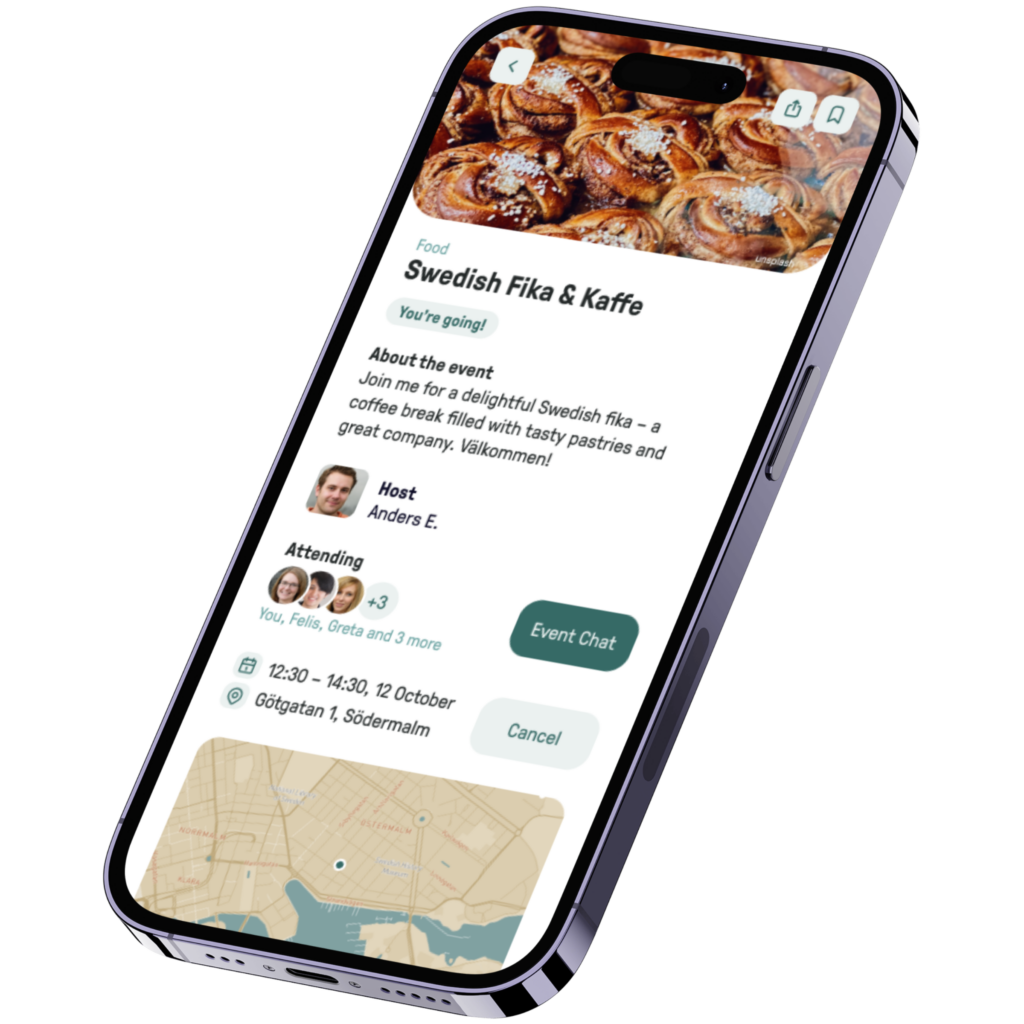
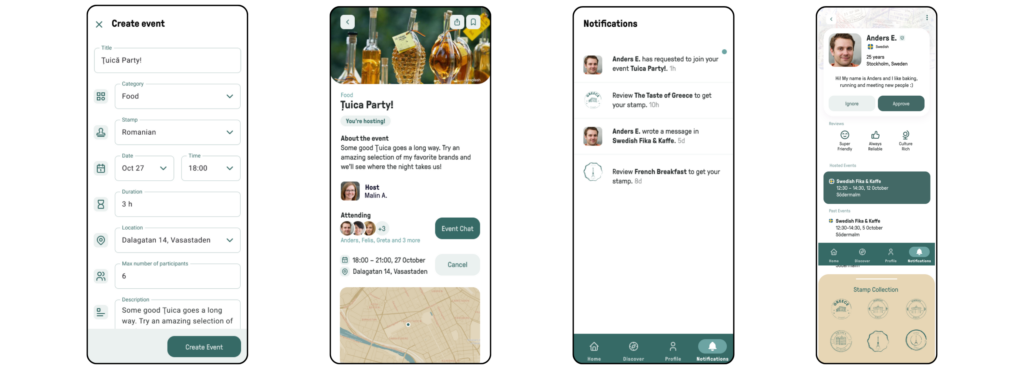
When selecting an event, the users can view a description, the host and attendees, the time, and the location. They can then request to register for the event. Once approved by the host, users gain access to the exact event location and the event chat, a group chat with the host and all attending members.
Approving Requests
After creating an event, users can approve the members they want to join by accepting incoming requests. They can view each member’s profile, which includes reviews from other attendees, events they are hosting or signed up for, and all the stamps they have collected.
Challenges and Learnings
1. Cultural probe as data-gathering method
We decided to try this data-gathering method to better understand the pains of our users. This involved a week-long diary where the participants would send us a message whenever they felt annoyed, frustrated, or helpless. They could send us pictures, text, voice notes, or any other media they preferred. Unfortunately, the method was unsuccessful as we received very little data from our participants, and none of it was relevant to our analysis. As this was a new approach for us, we underestimated the effort it would require from the participants. If I would use cultural probes again, I would make sure that either the task was more manageable or the incentive for participating higher.
2. Interview participants not representative of all newcomers in Sweden
We interviewed a limited user demographic due to availability constraints. However, considering the issue of segregation, other members of society, such as refugees, who we did not interview, are significantly more affected. To develop a digital solution that that effectively addresses the situation on a larger scale, comprehensive research involving all segments of society is necessary to gather diverse perspectives. Locals should also be interviewed to understand their motivations and pains.
3. Parallel design took longer than expected
Great for generating many ideas, but it takes significantly longer and must be accounted for in project planning.